跟着梗图学四六级英语:这些“长相相似”的单词,你分得清吗?
- 2026-09-24 04:59:43






跟
着
梗
图
CET-4 CET-6 CET-4 CET-6 CET-4 CET-6
学四六级英语
这些“长相相似”的单词,你分得清吗?
大家好
我是你们的四六级备考小助手
今天我们要用一张有趣的梗图
来学习几个在四六级考试中
经常出现、又极易混淆的单词
先来看看这张图:
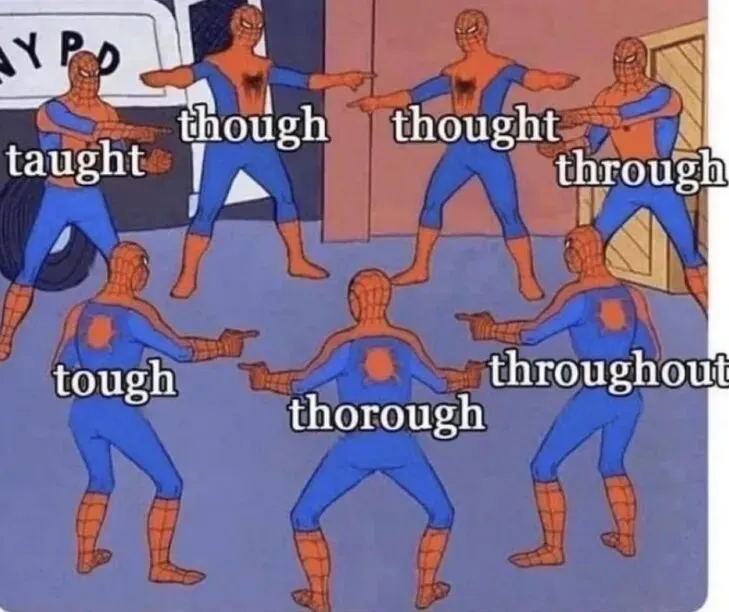
看到这些单词
你是不是也有点眼晕?
它们拼写相似
但意思和发音却大相径庭
堪称英语学习中的“拦路虎”
别担心
今天我们就来一一攻克它们
顺便掌握四六级常考考点!


逐个击破(一)
taught /tɔːt/
意思:动词teach的过去式和过去分词,意为“教,教授”。
例句:She taught English at a high school for ten years.(她在一所高中教了十年英语。)
though /ðəʊ/
意思:连词或副词,意为“虽然;尽管;不过”。
例句:Though it was raining, he went out.(虽然在下雨,他还是出去了。)
常用短语:
l as though(仿佛)
l even though(即使)
真题重现:His first lecture was delivered on Nov. 4, 1915, and it explained his new approach, though he admitted he did not yet have the precise mathematical formulation of it. 【2007年12月六级完形填空】此处though引导让步状语从句,意为“尽管”,是六级考试中的高频考点
thought /θɔːt/
意思:名词,意为“想法,思想”;也是think的过去式和过去分词。
例句:I thought you would come.(我原以为你会来的。)
常用短语:
l on second thought(转念一想)
l food for thought(引人深思的东西)。
真题重现:The story of the oak tree is suspected to have been invented as a thought exercise. 【2024年6月六级真题卷一】此处"thought exercise"意为“思维练习”或“思想实验”,考查名词用法。



逐个击破(2)
through /θruː/
意思:介词、副词或形容词,意为“通过;穿过;从头到尾”。
例句:We walked through the forest.(我们穿过了森林。)
常用短语:
l go through(经历)
l through and through(完全地)。
l through作为介词,表示“通过(某种方式/空间)”。当“through+名词”位于句首时,句子常用倒装。E.g.: Through the window came in wafts of intoxicating fragrance.
tough /tʌf/
意思:形容词,意为“坚韧的;困难的;强硬的”。
例句:It's a tough decision to make.(这是一个艰难的决定。)
常用短语:
l tough luck(倒霉)
l get tough with(对……强硬)。
真题重现:We often take a militaristic, “tough” approach to resilience... We believe that the longer we tough it out, the tougher we are... 【2019年6月四级真题卷一(阅读C/D段】同一段落中连续出现tough作形容词(强硬的)和tough it out(动词短语,意为“坚持到底”),考查词汇灵活运用。
thorough /ˈθʌrə/
意思:形容词,意为“彻底的,详尽的”。
例句:He gave the room a thorough cleaning.(他把房间彻底打扫了一遍。)
常用短语:
thorough examination(彻底检查)。
四六级考点:注意拼写,不要漏掉“ough”后的“r”,常与“through”混淆。
throughout /θruːˈaʊt/
意思:介词或副词,意为“贯穿,遍及”。
例句:The news spread throughout the country.(消息传遍了全国。)
四六级考点:强调整个范围或时间,比“through”更广泛。

End
▌编辑:米沙
▌声明:本文由青岛高校就业整理发布,转载请注明来源,如涉及侵权或对版权有疑问,请留言处理。

