周六开考!英语四六级作文备考全攻略
- 2026-09-22 02:17:26
CET4/6笔试进入倒计时!
作文作为开篇题型,得分弹性大、提分见效快。考前吃透评分标准、高分范文、经典模板和句型,就能快速优化写作逻辑、规避不必要失误,稳冲作文高分。



四六级作文满分15分,采用整体印象评分制,评分时先定整体档位,再微调分数,卷面整体质感、逻辑结构优先级远大于零散句式。四级、六级评分档位一致,但六级对语言复杂度、逻辑思辨性要求更高。
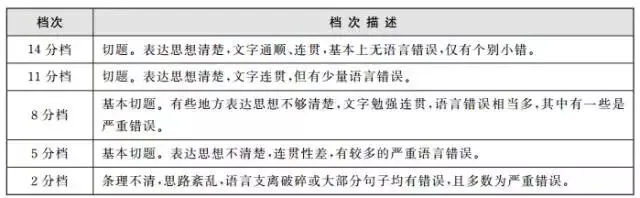
作文评分最看重的3个维度
1)结构(权重≈40%,最拉分)
三段或四段式:开头引入→主体论述→结尾总结
段间用:First/Besides/Therefore/In conclusion等逻辑清晰、层次分明,直接上一个档次
2)语言(权重≈35%,决定上限)
少低级错:时态、主谓一致、冠词、拼写
句式混搭:简单句+ 定语从句 + 状语从句,别全是短句,词汇不重复,精准即可,不用生僻词
3)内容(权重≈20%,保底)
切题第一,跑题直接低分
覆盖题干所有要点,别漏要点
��备考小贴士
1. 优先保证字数达标、结构完整,三段式布局绝不出错;
2. 杜绝时态、单复数、拼写等低级错误,比堆砌难词更重要;
3. 模板灵活套用,结合话题填充具体内容,避免空洞生硬;
4. 卷面整洁、书写工整,轻松拉高印象分。

四六级经典写作句型


1.好的/重要的
good→beneficial/positive/favorable
important→vital/crucial/significant
2.很多
many→a number of/numerous/a host of
much→a great deal of/ample
3.认为
think→believe/argue/hold the view that/maintain
4.越来越...
more and more→increasingly/growing/an increasing number of
5.喜欢
like→be fond of/be keen on/favor
6.导致
cause→lead to/result in/contribute to
7.提高
improve→enhance/promote/boost
8.困难
hard→challenging/tough
9.必要的
necessary→essential/indispensable
10重视
pay attention to→attach great importance toPeople's views on... vary from person to person. Some hold that... However, others believe that... (人们对...的观点因人而异,有些人认为...然而其他人却认为...)
Attitudes towards... vary from person to person. Different people hold different attitudestowards... (人们对待...的态度因人而异)
There are different opinions among people as to... (对于...人们的观点大不相同)
It is high time that we put an end to the (...). (该是我们停止这...的时候了)
There is no doubt that enough concern must be paid to the problem of... (毫无疑问,对...问题应予以足够重视)
Obviously, if we want to do something ... it is essential that... (显然,如果我们想要做...,很重要的是...)
Only in this way can we ... (只有这样,我们才能...)

万能模板及范文


万能三段式模板
适配现象分析、观点讨论、问题解决90%的四六级作文话题,结构规整、逻辑清晰,规避低分模板通病。
开头段(引入话题+表明观点)
Recently, the phenomenon of 话题关键词 has aroused wide concern among college students. Opinions vary from person to person. As far as I am concerned, it is of great significance for us to treat it rationally.
主体段(分点论述,万能衔接)
There are several reasons/measures accounting for this phenomenon. First of all, 观点1/原因1/措施1. Besides, 观点2/原因2/措施2. What's more,观点3/原因3/措施3. All these factors contribute to the importance of this topic.
结尾段(总结全文+升华主题)
In conclusion, we should attach great importance to 话题关键词. Only by taking effective measures and holding a positive attitude can we make full use of its advantages and avoid its negative effects.
1.解决方法型
解决方法题型要求考生列举出解决问题的多种途径:
(1).问题现状
(2).怎样解决(解决方案的优缺点)In recent days, we have to face the problem _____(描述问题A), which is becoming more and more serious. First, _____(说明A的现状). Second, _____(举例进一步说明现状)
Confronted with A, we should take a series of effective measures to cope with the situation. For one thing, _____(解决方法一). For another _____(解决方法二). Finally, _____(解决方法三).
Personally, I believe that _____(我的解决方法). Consequently, I’m confident that a bright future is awaiting us because _____(带来的好处).
2.说明利弊型
这种题型往往要求先说明一下现状,再对比事物本身的利弊,有时也会单从一个角度(利或弊)出发,最后往往要求表明自己的态度(或对事物前景提出预测)(1).说明事物现状
(2).事物本身的优缺点(或一方面)
(3).你对现状(或前景)的看法Nowadays many people prefer A because it has a significant role in our daily life. Generally, its advantages can be seen as follows. First _____(A的优点之一). Besides _____(A的优点之二).
But every coin has two sides. The negative aspects are also apparent. One of the important disadvantages is that _____(A的第一个缺点).To make matters worse, _____(A的第二个缺点).
Through the above analysis, I believe that the positive aspects overweigh the negative ones. Therefore, I would like to _____(我的看法).
From the comparison between these positive and negative effects of A, we should take it reasonably and do it according to the circumstances we are in. Only by this way, _____(对前景的预测).
3.对比观点题型
要求论述两个对立的观点并给出自己的看法
(1).有一些人认为……
(2).另一些人认为……
(3).我的看法……
The topic of _____(主题) is becoming more and more popular recently. There are two sides of opinions of it. Some people say A is their favorite. They hold their view for the reason of _____(支持A的理由一). What is more, _____(理由二). Moreover, _____(理由三).
While others think that B is a better choice in the following three reasons. Firstly, _____(支持B的理由一). Secondly (besides), _____(理由二). Thirdly (finally), _____(理由三).
From my point of view, I think _____(我的观点). The reason is that _____(原因). As a matter of fact, there are some other reasons to explain my choice. For me, the former is surely a wise choice.
4.社会问题(现象)型
提出一个社会热点问题或事件,要求考生探讨问题出现的原因以及解决方法。
(1).一个社会问题或者现象
(2).产生的原因及对社会和我们生活的影响
(3).提出解决办法及前景的预测
Nowadays, there exists an increasingly serious social/economic/ environmental problem. _____(问题A)has increasingly become a common concern of the public.
There are a couple of reasons booming this problem/phenomenon. The main reason is _____. What is more, _____. Thirdly, _____. It has caused substantial impact on the society and our daily life. (阐释影响)
A dozen of measures are supposed to take to prevent A from bringing us more harm. For one thing _____. For another _____. Based on the above discussions, I can easily forecast that more and more people will _____(展望未来).
5.图表式作文
要求考生通过图表信息来描述一个现象或情况,阐释变化的原因。(1).描述图表信息
(2).阐释变化产生的原因
(3).总结趋势
It is obvious in the graph/table that the rate/number /amount of Y has undergone dramatic changes. It has gone up/grown/fallen /dropped considerably in recent years (as X varies).
What is the reason for this change? Mainly there are three reasons behind the situation reflected in the graph/table. First of all,_____(第一个原因). More importantly,_____(第二个原因). Most important of all, _____(第三个原因).
From the above discussions, we have enough reason to predict what will happen in the near future. The trend described in the graph/table will continue for quite a long time (if necessary measures are not taken 括号里的适用于那些不太好的变化趋势).
四六级高分通用范文
结合四级阅卷内容完整、逻辑流畅、词汇多样、句式丰富、语法无误五大评分维度优化,为大家整理了四级、六级高频话题高分范文,适配校园、社会、成长等必考话题,供考前背诵借鉴。
四级范文
✅ 范文1:大学生时间管理
Time Management for College Students
Time management is an essential skill for every college student. Modern campus life is filled with heavy study tasks, diverse extracurricular activities and various social interactions. Faced with such a busy schedule, many students fail to arrange their time properly, which results in low study efficiency and wasted precious time.
Fortunately, we can take practical measures to improve this situation. To begin with, we should make a detailed daily schedule and set clear task priorities to arrange time reasonably. In addition, we need to overcome procrastination and focus on one task at a time. Last but not least, it is necessary to strike a balance between study and rest, since proper relaxation can effectively refresh ourselves and boost learning efficiency.
In conclusion, good time management helps us study efficiently and live a fulfilling campus life. This vital skill is of great significance to our personal growth and long-term development.
✅ 范文2:社交媒体的正确使用
Responsible Use of Social Media
In the digital era, social media has become an indispensable part of college students' daily life. However, the improper use of online platforms has also caused many problems. Therefore, it is essential for students to use social media in a responsible manner.
There are three key principles we should follow. First, we must protect personal privacy and never reveal private information such as phone numbers and home addresses at will. Second, we need to establish sound values, avoid following online trends blindly or spreading false rumors, and stick to independent thinking. Third, we should limit our screen time, as excessive use of social media will greatly disturb our study and daily rest.
In short, social media is a beneficial tool if used properly. By using it rationally, we can fully enjoy its convenience while effectively avoiding potential online risks.
六级范文
✅ 范文 1:科技对人际关系的影响
Technology and Interpersonal Relationships
The rapid advancement of digital technology has thoroughly revolutionized the modes of interpersonal communication in modern society. Cutting-edge network technology enables people to connect with each other instantly regardless of geographical distance. However, excessive reliance on virtual communication has also significantly reduced in-person face-to-face interaction among individuals.
From a comprehensive perspective, technology exerts both positive and negative influences on human relationships. On one hand, it greatly boosts communication efficiency and breaks the limitations of time and space. We can chat online, make video calls and share daily life moments anytime and anywhere, which effectively maintains and strengthens long-distance kinship and friendship. On the other hand, overindulgence in electronic devices brings about noticeable drawbacks. A growing number of people tend to immerse themselves in mobile phones in daily life rather than communicating with family members and acquaintances face to face, which inevitably widens emotional gaps and weakens intimate interpersonal bonds.
To sum up, technology itself is a neutral product of social progress. It should serve as a practical communication tool rather than a complete replacement for real-life interaction. Only by reasonably balancing virtual online communication and offline face-to-face interaction can we sustain harmonious and sincere interpersonal relationships in the digital era.
✅ 范文 2:终身学习的重要性
The Importance of Lifelong Learning
In an era of rapid societal transformation and technological innovation, lifelong learning has become an indispensable quality for every modern individual. With society evolving at an unprecedented speed, the traditional belief that formal schooling can provide people with sufficient lifelong knowledge has long been completely outdated.
Undeniably, adhering to lifelong learning brings numerous profound benefits to our study and life. To begin with, it allows people to keep abreast of social progress and effectively cope with various emerging challenges amid constant changes. Furthermore, continuous learning enriches people’s professional knowledge reserve and broadens their global horizons, adding profound value and lasting vitality to ordinary personal life. Most importantly, it helps improve one’s comprehensive capabilities and core workplace competitiveness, laying a solid and reliable foundation for long-term future career development.
To conclude, lifelong learning is not merely an optional choice but an inevitable necessity in fast-paced contemporary society. Therefore, we should actively cultivate the habit of persistent learning, stick to lifelong self-improvement, and strive to keep pace with the rapidly evolving times.
最后祝愿所有参加本次四六级考试的同学,作文稳拿高分,顺利通关,成功上岸!

准考证
身份证
学校要求的其他证件
无关物品一律按要求存放
*条形码必须贴对位置,错贴/不贴=违规
*填涂:
姓名 / 准考证:黑色签字笔
选择题:HB-2B 铅笔
*作文期间不能翻试题册
*听力结束立刻收答题卡1,不准继续写
*非听力时间不能戴耳机
*所有答案必须写在答题卡指定区域,试题册上作答无效

编辑:徐秀峰
审核:张敏、丁莹莹
声明:本文参考有道考神四六级、英语四级六级学习、新东方英语四六级、Teacher 王的自习室、词汇进阶录等公众号以及豆包等网络资源,仅供学习交流使用。版权归原作者所有,如侵联删,谢谢!

