四六级、考研英语同源外刊精读《自然》注意力集中时长真的在变短吗?
- 2026-09-17 04:09:13


Are attention spans really shrinking? What the science says
注意力时长真的在变短吗?科学研究给出的答案
导读:数字干扰正在争夺人们的注意力,但我们与生俱来的专注能力似乎并未减弱......

A century before social-media bans and advice to disable device notifications, the inventor and science-fiction writer Hugo Gernsback proposed a more extreme way to avoid distraction⁽¹⁾: an isolating wooden helmet. Outside influences, he said, were “the greatest difficulty that the human mind has to contend⁽²⁾ with”. Gernsback’s isolator device — part diving suit, part monastic cell — did help him to work, he said, but it came with a risk of suffocation⁽³⁾. He later installed an air supply.
早在社交媒体禁令、关闭设备通知这类建议出现的一个世纪前,发明家兼科幻作家雨果・根斯巴克就提出了一种更极端的抗干扰方式:一款封闭式木质头盔。他称,外界干扰是 “人类心智必须应对的最大难题”。根斯巴克这款隔离装置兼具潜水服和修道院单人小屋的特质,他表示这款装置确实能帮自己专心工作,但存在窒息风险。后来他为装置加装了供气装置。
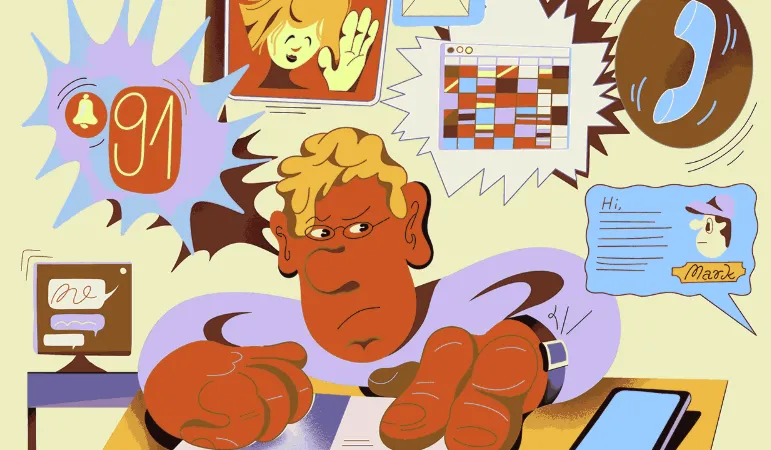
Concerns that sustained⁽⁴⁾ thought is under assault⁽⁵⁾ have become even more acute⁽⁶⁾ in the digital era. Smartphones buzz, Internet tabs multiply and television episodes carry regular reminders to help people keep track of the plot. Surveys suggest that we feel less able to concentrate, teachers report distracted students and headlines declare that our attention spans are shrinking.
在数字时代,人们对于深度持续思考正遭受冲击的担忧愈发强烈。手机不断弹窗震动,浏览器网页标签越开越多,电视剧还会频繁插播剧情回顾帮助观众理清脉络。各类调查显示,人们愈发难以集中精力;老师反映学生上课容易走神;新闻标题也纷纷宣称人类的注意力时长正在缩短。
Research across psychology and neuroscience, however, has built up a more nuanced picture of what is happening to our attention spans. The results suggest that people do flit⁽⁷⁾ from one task to another more frequently than they did in previous decades, and that this switching is often detrimental⁽⁸⁾ to performance. But there is little evidence that the brain’s fundamental ability to concentrate has been impaired⁽⁹⁾. This suggests that if we can shut down the distractions of our environment, it is possible to recover focus.
然而,心理学与神经科学领域的多项研究,为人类注意力时长的变化勾勒出了更为细致全面的图景。研究结果表明,相比几十年前,人们切换任务的频率确实变得更高,而这种频繁切换往往会损害做事效率与表现。但几乎没有证据表明,大脑与生俱来的专注能力受到了损伤。这意味着只要我们隔绝外界环境中的干扰,就完全可以重新找回专注力。
......

后台回复【外刊精读】
获取完整版PDF
高频词汇
(1)distraction
n. 分心;干扰;消遣
例句:Social media is a major distraction for students.翻译:社交媒体是学生主要的干扰源.(2)contend
v. 应对;抗争;争夺
例句:We have to contend with various difficulties in life.翻译:我们必须应对生活中的各种困难。(3)suffocation
(4)sustained
*在英语四六级、考研的前期学习中,外刊是非常重要的练习语感和磨耳朵的素材。
后台回复【外刊精读】,即可获取完整版PDF。
微信号:hx18014854621


