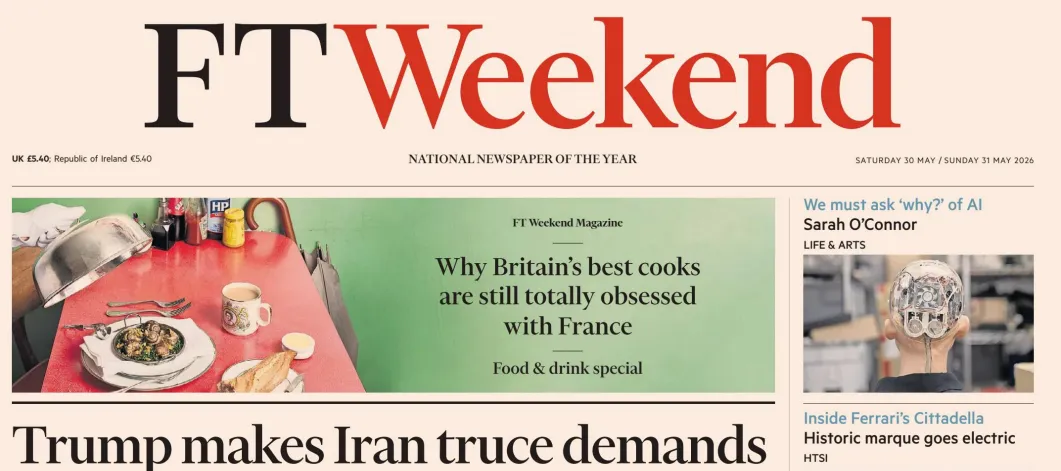
考研四六级英语双语精读题源FT金融时报|人工智能提出了一个凯恩斯近百年前就预见到的问题
- 2026-09-21 13:23:42


AI poses a question Keynes anticipated almost a century ago
英文:AI poses a question Keynes anticipated almost a century ago
中文:人工智能提出了一个凯恩斯近百年前就预见到的问题
📰 来源:FT Weekend 📅 日期:2026.5.30
📝 词数:约430 words ⭐ 难度:★★★★☆
第一段:论点引入—"禁止自动驾驶"逻辑的谬误
英文原文
In "The New Luddite movement" (Opinion, FT Weekend, May 23), Camilla Cavendish suggests that if politicians wish to reassure citizens who are fearful of AI, they should ban civilians from vehicles simply because so many people drive for a living. The consequences of eliminating those jobs should not be viewed lightly. We should consider what we would really be doing if we banned self-driving vehicles to protect people's incomes.
中文翻译
卡米拉·卡文迪什在《新勒德主义运动》(FT周末版观点版,5月23日)一文中提出,若政治家希望安抚那些对人工智能心存恐惧的公民,理应禁止民用自动驾驶车辆上路,原因无他,仅仅是因为太多人以驾车为生。然而,我们不能轻视消灭这些工作岗位所带来的后果。我们应当认真思考:若为了保护人们的收入而禁止自动驾驶车辆,我们究竟在做什么?
第二段:核心辨析—保住薪资≠保住真实工作
英文原文
If a taxi cannot drive itself then the driver performs labour that is truly necessary to meet a demand. The job in that case is a real one. But imagine it was decided that humans must continue to drive autonomous taxis though the taxis are perfectly capable of driving themselves. Such a policy would only protect the wage. It would not preserve the real job because the necessary human labour of driving would have ceased to exist. And what a poor use of human time it would be: to spend 40 or more hours each week operating a machine that has no need to be operated.
中文翻译
如果出租车不能自行驾驶,那么司机从事的便是真正满足需求所必需的劳动,这份工作因此是真实的。但设想一下,若有人规定:即便出租车完全有能力自动驾驶,人类仍必须坐在方向盘后面—这样的政策不过是保住了工资,却并未保住真实的工作,因为驾驶这一必要的人工劳动已然不复存在。而这将是多么糟糕的时间浪费啊:每周花费40小时乃至更多,去操控一台根本无需操控的机器。
第三段:历史类比—从挑水到现代管道的启示
英文原文
This principle is universal. For thousands of years we hauled water from rivers, lakes and wells into our homes until modern plumbing removed the need for such toil. No serious person would today argue that we should return to carrying water in order to create employment and provide a sense of purpose. Restricting AI would be no different — it would leave us performing fake jobs rather than doing real ones.
中文翻译
这一原则具有普遍性。数千年来,人类一直从河流、湖泊和水井中将水搬运回家,直到现代管道技术让这种苦役成为历史。如今,没有一个理智的人会主张我们应该重返挑水时代,以此创造就业、赋予生活意义。限制人工智能与此并无二致—那不过是让我们去做那些假工作,而非真正有价值的工作。
第四段:凯恩斯的预言—人类将面临"心理挑战"
英文原文
John Maynard Keynes saw all this coming almost a century ago. In his 1930 essay "Economic Possibilities for our Grandchildren", he imagined a world in which people no longer need to work. He concluded that the greatest challenge would not be economic but psychological. We had been, he argued, "trained too long to strive and not to enjoy" such that "for many ages to come the old Adam will be so strong in us that everybody will need to do some work if he is to be contented."
中文翻译
约翰·梅纳德·凯恩斯在近百年前便已预见到这一切。在其1930年的论文《我们孙辈的经济前景》中,他设想了一个人们不再需要工作的世界,并得出结论:最大的挑战将不是经济层面,而是心理层面。他认为,我们被"训练得太久,只知奋斗,不知享乐",以至于"在很长的岁月里,原始本能在我们身上将依然如此强烈,每个人都需要做些工作,才能感到满足。"
第五段:直面问题—AI时代最深刻的叩问
英文原文
AI presents us with a profound yet simple question — can we be happy and fulfilled if we no longer need to work? It's a question we must face openly and honestly. We cannot answer it by pretending that obsolete labour remains necessary, nor by suppressing humanity's progress.
中文翻译
人工智能向我们提出了一个深刻而简单的问题—如果我们不再需要工作,我们还能幸福、圆满吗?这是一个必须坦诚面对的问题。我们既不能靠假装过时的劳动仍有必要来回避它,也不能靠压制人类的进步来搪塞它。
📚 词汇词组
1. anticipate /ænˈtɪsɪpeɪt/ v.
① 预期,预料 ② 提前考虑到,预见
例句:Few economists anticipated the speed at which AI would transform the labour market.
2. reassure /ˌriːəˈʃʊr/ v.
① 使消除疑虑,安慰 ② 使放心,重新保证
例句:The government tried to reassure workers that new jobs would replace those lost to automation.
3. eliminate /ɪˈlɪmɪneɪt/ v.
① 消除,根除 ② 淘汰,去掉
例句:New technology has the potential to eliminate many repetitive manual tasks.
4. obsolete /ˌɒbsəˈliːt/ adj.
① 过时的,废弃的 ② 已被取代的,不再使用的
例句:Many skills that were valuable a decade ago have become obsolete in the digital economy.
5. haul /hɔːl/ v.
① 费力地拖,拉 ② 长途运输
例句:Before industrialisation, workers had to haul heavy loads by hand across great distances.
6. toil /tɔɪl/ n./v.
① 辛苦劳作,苦役(n.) ② 辛勤工作,艰难地做(v.)
例句:Generations of farmers toiled in the fields from sunrise to sunset.
7. contented /kənˈtentɪd/ adj.
① 满足的,心满意足的 ② 知足的,安于现状的
例句:He led a simple but contented life in the countryside, far from the pressures of city work.
8. suppress /səˈpres/ v.
① 压制,镇压 ② 抑制,阻止
例句:Attempting to suppress technological change has historically proven futile and counterproductive.
✍️ 写作句总结
原句
Restricting AI would be no different — it would leave us performing fake jobs rather than doing real ones.
结构抽象
Restricting [X] would be no different — it would leave us [doing A] rather than [doing B].
造句示范
Banning online education platforms would be no different — it would leave students seeking outdated resources rather than accessing the best knowledge available globally.
长难句分析
We cannot answer it by pretending that obsolete labour remains necessary, nor by suppressing humanity's progress.
主干:We cannot answer it by pretending... nor by suppressing... 主语 = We 谓语 = cannot answer 宾语 = it(指前文所提的深刻问题)
并列介词短语:by pretending... nor by suppressing... 使用"not...nor..."平行结构,列举两种错误的回避方式 第一种:pretending that obsolete labour remains necessary(假装过时劳动仍有必要) 第二种:suppressing humanity's progress(压制人类进步)
理解要点:本句以简洁有力的双重否定收尾,点明文章核心立场;"obsolete"(过时的)是学术写作中描述技术更替的高频词;"nor by doing"平行结构是英语高分作文中增强逻辑层次感的经典手法,适合托福、雅思议论文写作借鉴
📝 阅读理解
题目:What is the author's main argument regarding the use of AI to protect employment?
A. Governments should subsidize workers who are displaced by AI to help them find new jobs B. Protecting wages by forcing humans to do work that machines can do is not preserving real employment C. Politicians should listen to Keynes and introduce a universal basic income immediately D. Self-driving vehicles should be banned until society is psychologically ready for mass unemployment
答案解析
✅ 正确答案:B
❌ 选项A:错误。作者并未提出政府补贴方案,文章聚焦的是"假工作"与"真工作"的本质区别,而非收入补偿机制。
✅ 选项B:正确。作者以自动驾驶出租车为例,明确指出"Such a policy would only protect the wage. It would not preserve the real job",这正是全文的核心论点。
❌ 选项C:错误。作者引用凯恩斯是为了说明心理挑战早已被预见,并未以此为据主张立即推行全民基本收入。
❌ 选项D:错误。恰恰相反,作者反对以保护就业为由限制AI,认为那不过是在制造虚假工作岗位。
📖 全文概括
中文段落大意
第一段:以卡文迪什的"禁止自动驾驶"建议为靶点,引出核心质疑——用禁令保护就业,真正保住的究竟是什么?
第二段:辨析"保住薪资"与"保住真实工作"的本质差别,指出让人类去操作一台完全不需要人操作的机器,是对人类时间的极大浪费。
第三段:以"挑水→管道"的历史类比说明技术进步不可逆,限制AI只会让人们从事毫无实质价值的"假工作"。
第四段:援引凯恩斯1930年的预言,指出真正的挑战不是经济问题,而是人类能否摆脱"必须劳动才能满足"的心理惯性。
第五段:直面AI时代的根本叩问—人类若不再需要工作,能否依然幸福?作者呼吁坦诚面对,而非逃避或压制进步。
英文全文总结
This article, written as a letter to the FT Weekend editor, argues against restricting AI to protect employment. The author uses the example of self-driving taxis to distinguish between protecting real jobs and merely preserving wages. Drawing on the historical analogy of modern plumbing replacing the labour of hauling water, the author contends that forcing humans to perform work that machines can do results in meaningless "fake jobs." The piece then invokes John Maynard Keynes' 1930 essay, which foresaw that the greatest challenge of a post-work world would be psychological rather than economic. The author concludes by urging society to honestly confront the question of whether humans can find fulfilment without work, rather than answering it through denial or suppression of technological progress.
🎯 打卡作业
请翻译以下划线句:
"We had been trained too long to strive and not to enjoy such that for many ages to come the old Adam will be so strong in us that everybody will need to do some work if he is to be contented."
💬 在评论区留下你的翻译,下期公布参考答案!